9331 dunewood
At the request of the soon to be homeowners, 9331 Dunewood was inspired by compact 1920s – 1950s era Lake Michigan cottages, Arts & Crafts era cottages, and a desire for something very different than the Chicago brick bungalows the homeowners and their family had grown up in and around. As the designer of 9331 Dunewood, I was interested in the architectural connections between Arts & Crafts era cottages and the traditional folk Cottages of Japan. I was also influenced by the writings and work of Robert Venturi, specifically, Robert Venturi’s recent cottage projects that worked to push the traditional boundaries of the cottage housing type into interpretations that were complex and contradictory, but not at the cost of being livable and enjoyable by a family that had little interest in post-modern architectural theory if it couldn’t be enjoyed by a cottage full of people during long weekend stays.
Additionally, research was undertaken on the history of the area at the local Bridgman Library which maintained and made available their extensive collection of regional historical documentation. Newspaper articles and books in the Bridgman Library collection documented not only the geological, archaeological, and botanical history of Bridgman/Dunewood, but also the history of its Native American population and its initial non-native population. Native American stories of how the branches of massive softwood trees provided cover during snowstorms and the post-logging transition from softwood to hardwood forest were of particular interest and eventual influence.
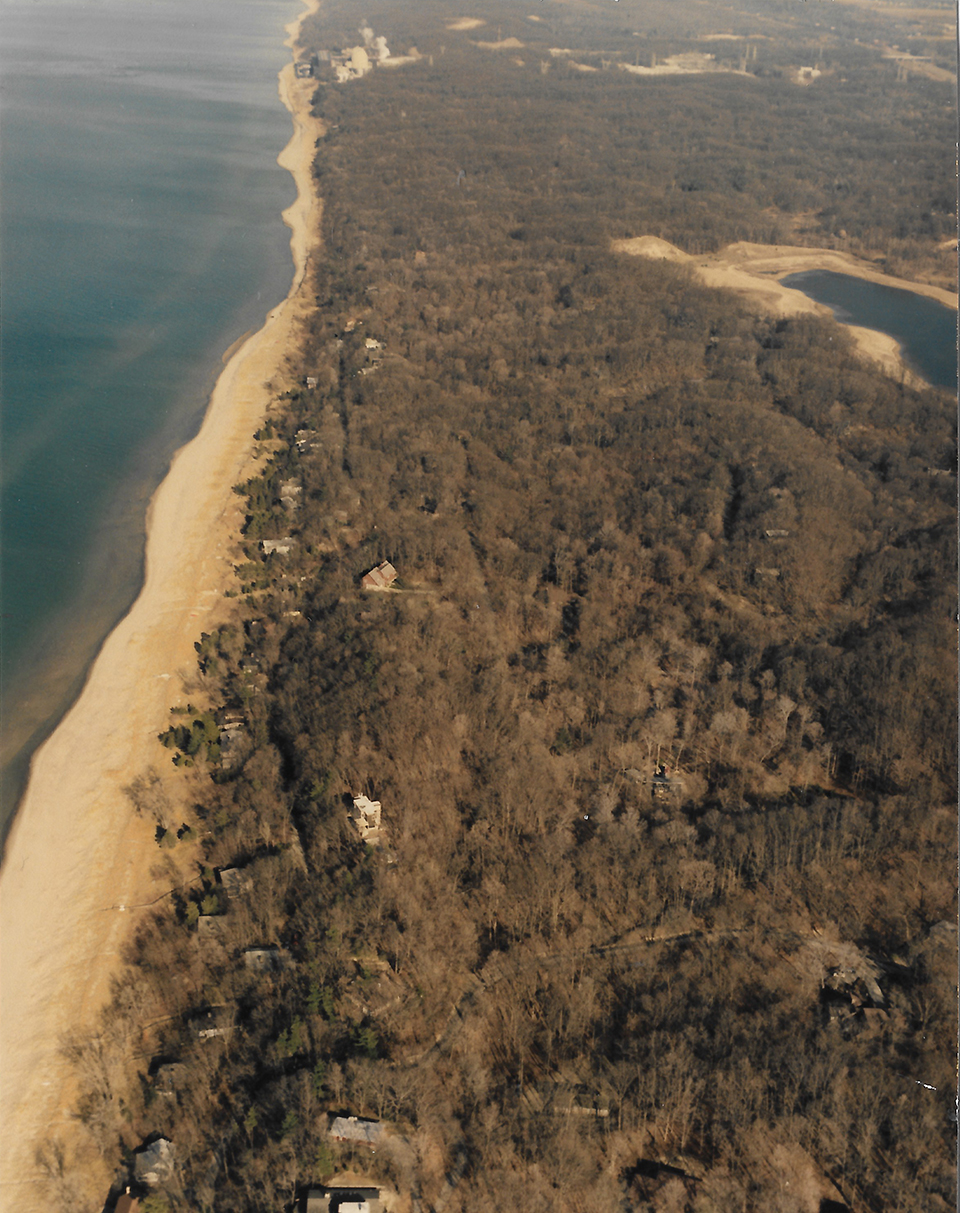
Before beginning work on the Bridgman Residence, an aerial photographer was hired to document the site prior to construction. The same photographer was hired 2 years later to document the site post construction. The intent was to show the minimal impact the home would have on the heavily forested sand dunes along Lake Michigan's coastline.
Additionally, research was undertaken on the history of the area at the local Bridgman Library which maintained and made available their extensive collection of regional historical documentation. Newspaper articles and books in the Bridgman Library collection documented not only the geological, archaeological, and botanical history of Bridgman/Dunewood, but also the history of its Native American population and its initial non-native population. Native American stories of how the branches of massive softwood trees provided cover during snowstorms and the post-logging transition from softwood to hardwood forest were of particular interest and eventual influence.
Before beginning work on the Bridgman Residence, an aerial photographer was hired to document the site prior to construction. The same photographer was hired 2 years later to document the site post construction. The intent was to show the minimal impact the home would have on the heavily forested sand dunes along Lake Michigan's coastline.
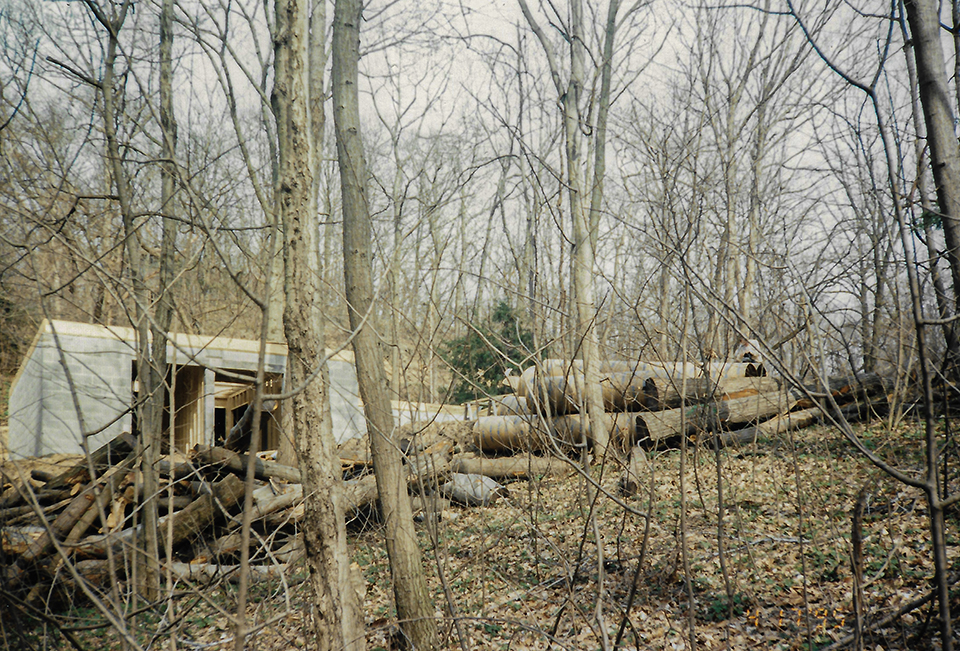
All trees removed during construction were sawed into boards on site by a local sawyer with a portable sawmill. Boards were dried nearby in solar kilns operated by the local sawyer. Once dried, the boards were properly stored in the new home's basement for use as furniture. Trees and hardwoods from the site included red oak, beech, and basswood.

Zoning regulations related to "critical dunes" building sites limited potential cottage locations and the dimensions of cottage's footprint to areas that were essentially flat. The cottage is approximately 1,200 s.f. of interior living space, 400 s.f. of screen porch, 400 s.f. of outdoor deck and 800 s.f. of basement.
It’s probably worth noting, that this is the last project I would draft by hand. I’d already begun my transition to Autocad at the offices of Perkins & Will, but after I left Perkins & Will, I took a job with Pappageorge Haymes and Pappageorge Haymes was still a hand-drafting office. These drawings were made with a combination of plastic leads and Rapidograph ink pens on double sided matte-mylar. Additional sheets with building sections, enlarged details, plumbing, hvac, schedules, and specifications were also hand drafted and lettered out of a combination of nostalgia and necessity, as I didn’t have a personal PC and/or copy of Autocad in my home, which meant I had no choice but to draft by hand.
It’s probably worth noting, that this is the last project I would draft by hand. I’d already begun my transition to Autocad at the offices of Perkins & Will, but after I left Perkins & Will, I took a job with Pappageorge Haymes and Pappageorge Haymes was still a hand-drafting office. These drawings were made with a combination of plastic leads and Rapidograph ink pens on double sided matte-mylar. Additional sheets with building sections, enlarged details, plumbing, hvac, schedules, and specifications were also hand drafted and lettered out of a combination of nostalgia and necessity, as I didn’t have a personal PC and/or copy of Autocad in my home, which meant I had no choice but to draft by hand.


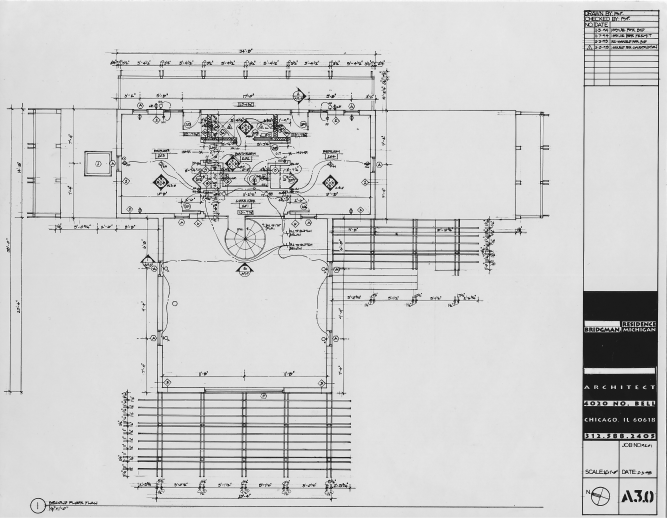


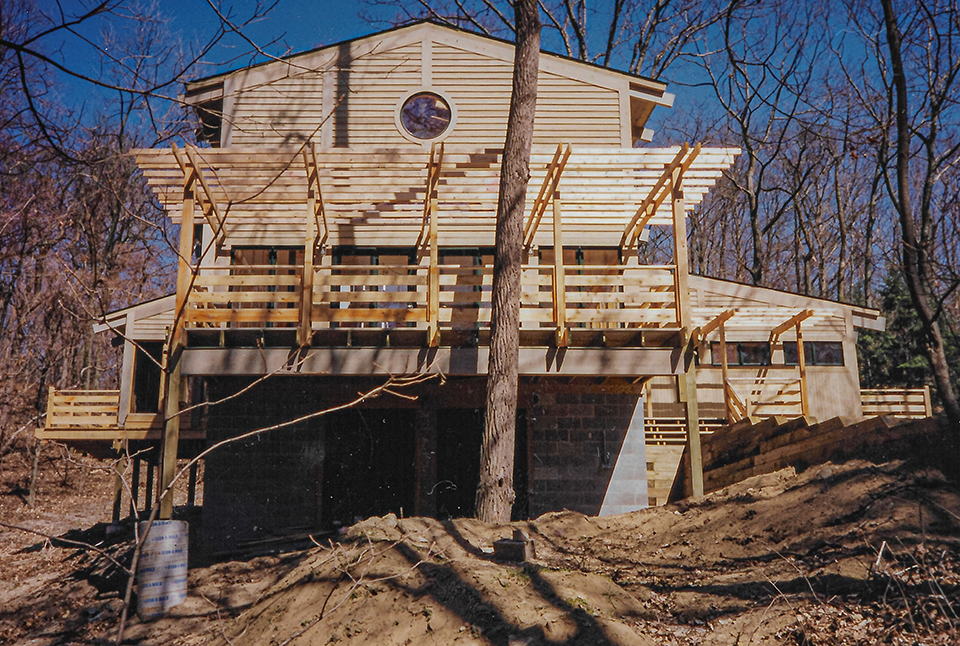
Each elevation responds to its orientation. The west elevation provides nightly views of Lake Michigan sunsets. The west elevation includes the largest outdoor deck accessed from the cottage’s living room and kitchen.
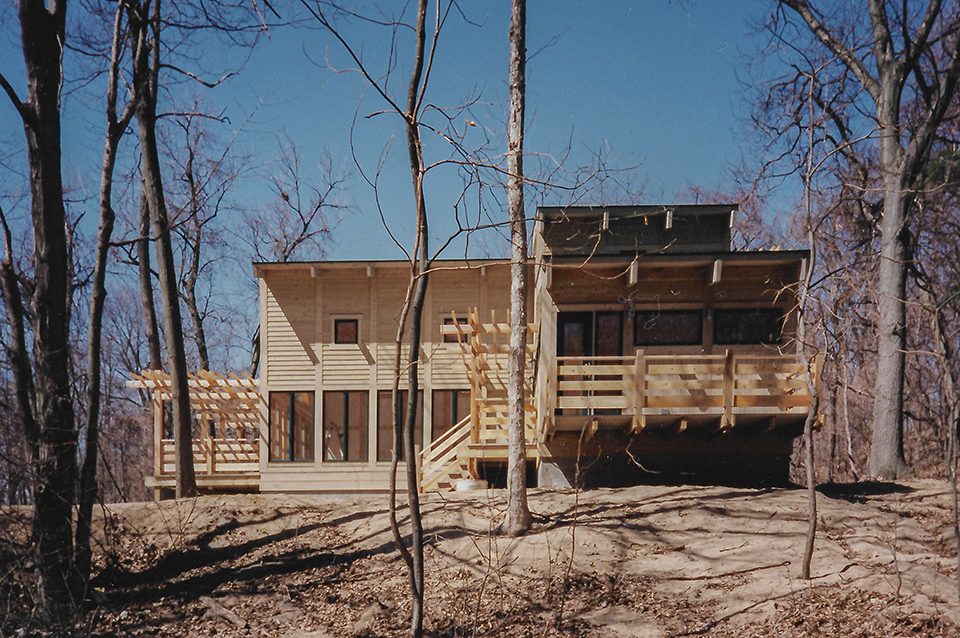
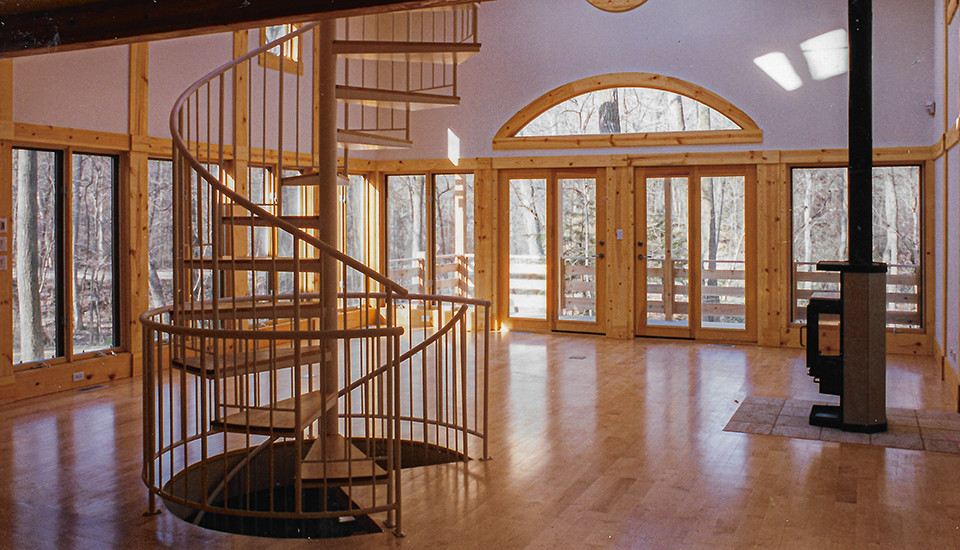
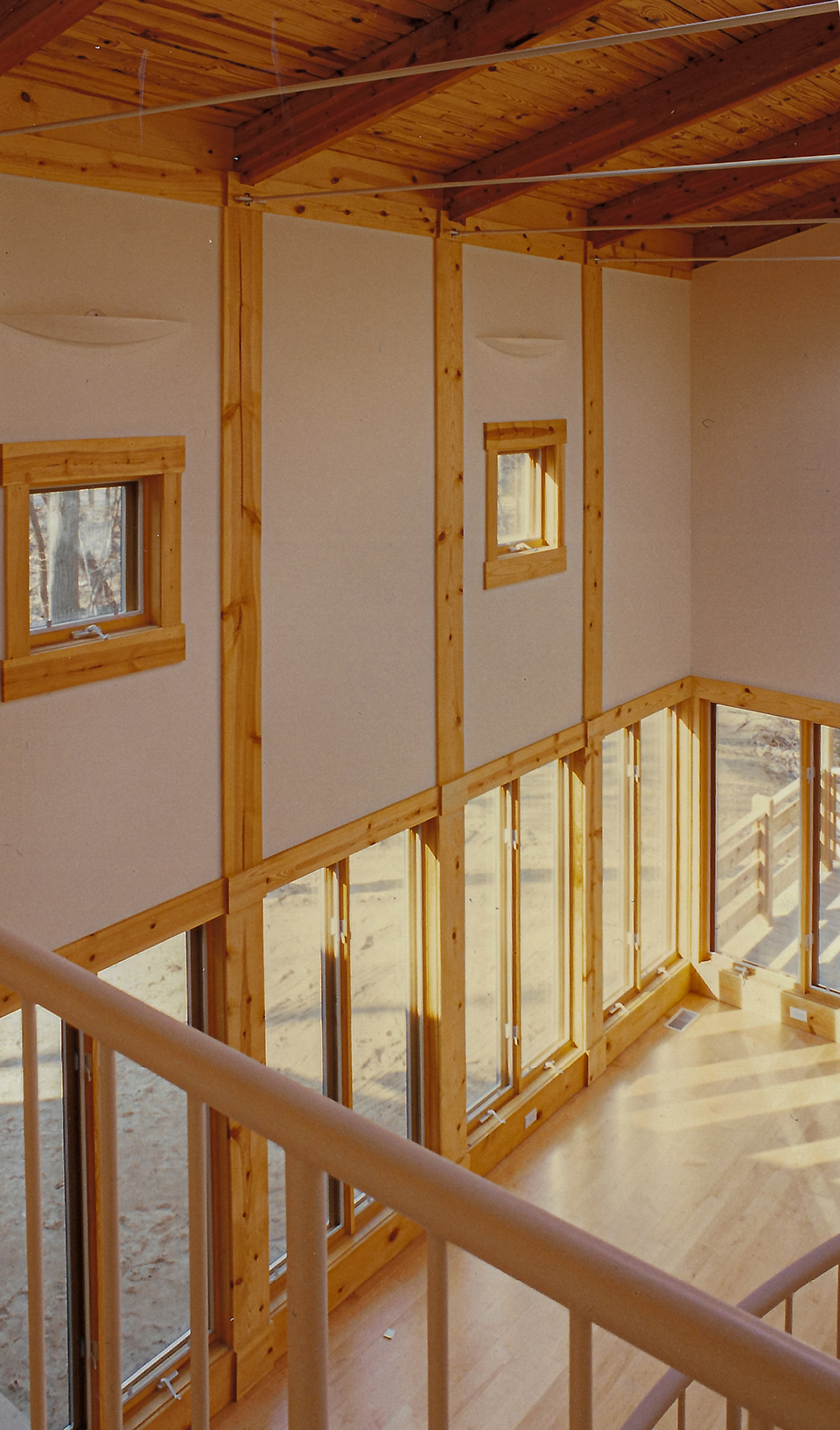
The south elevation incorporates the largest windows which during the winter, when deciduous trees drop their leaves, provides both views of the surrounding dunes and daytime heat. Night-time heat is provided by a wood burning fireplace capable of heating the entire interior with site sourced firewood.
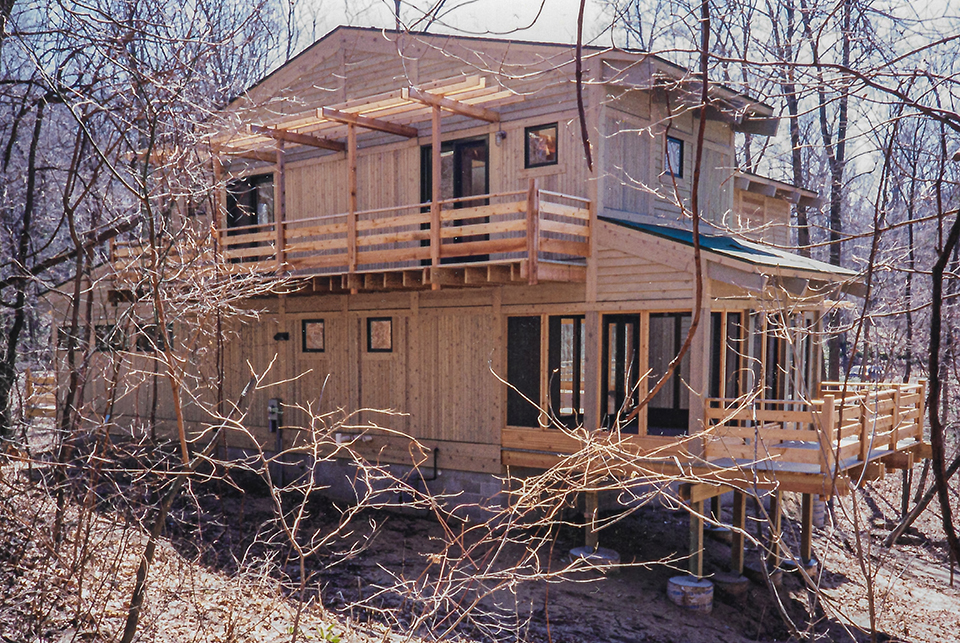
The east elevation's long balcony connects two second story bedrooms overlooking the adjacent sand dunes heavily forested steep incline. The home's screen porch and cantilevered balcony provide cover during rainstorms, a great place to barbecue and insect free outdoor evenings.
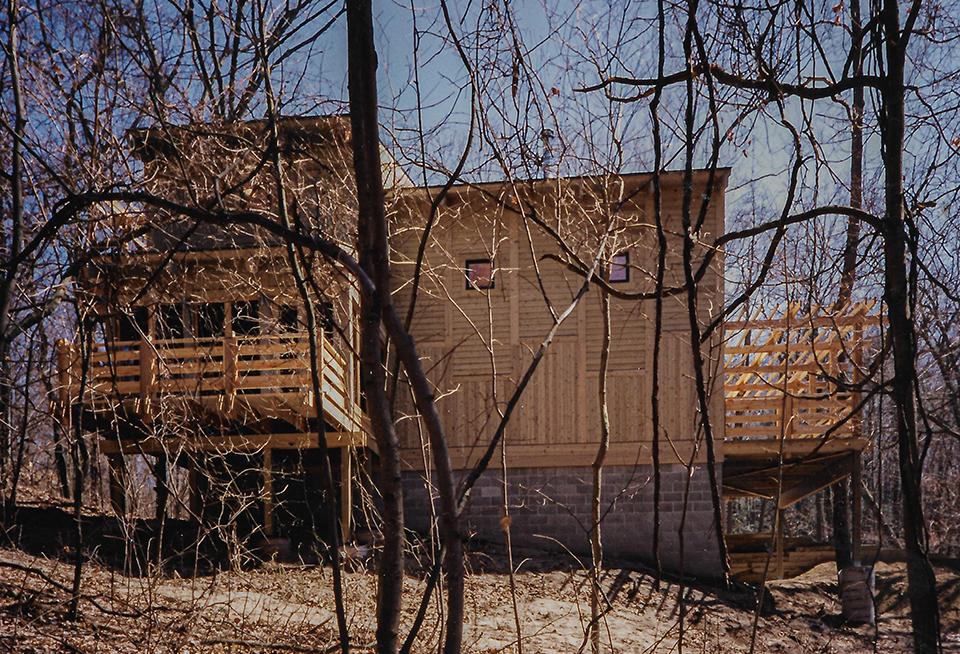
The cold and windy north elevation receives 2 small clerestory windows and a variety of cedar siding types, dimensions, and orientations, creating visual interest on par with the home’s three other elevations.

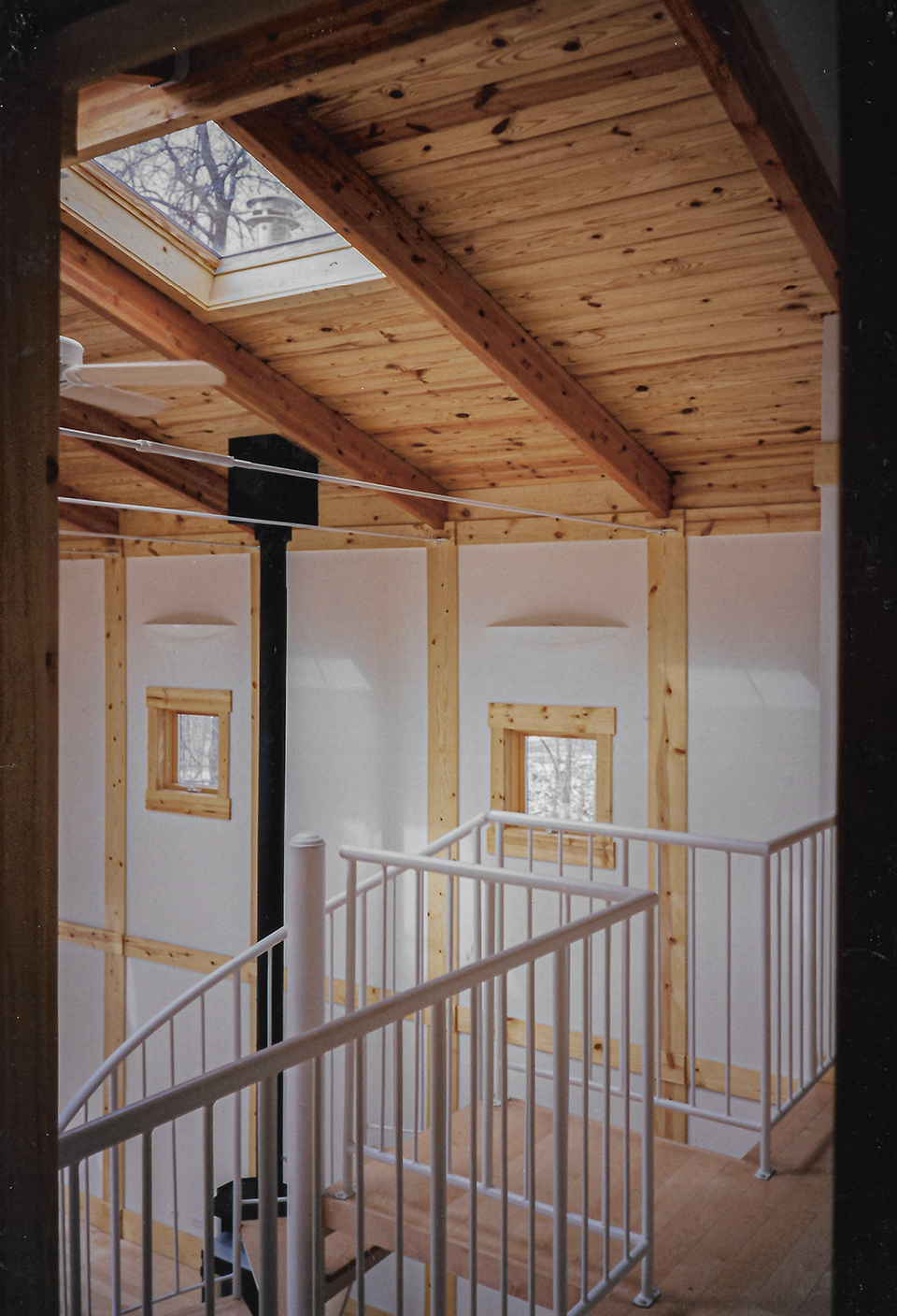
Designed as a weekend and/or vacation cottage for a family of 8’-0” high drywall ceiling city dwellers, the opposite approach was taken here as only portions of the cottage’s ceilings are drywall and the majority of ceilings are the underside of the angled roofs and the structural tongue & groove structural roof deck.
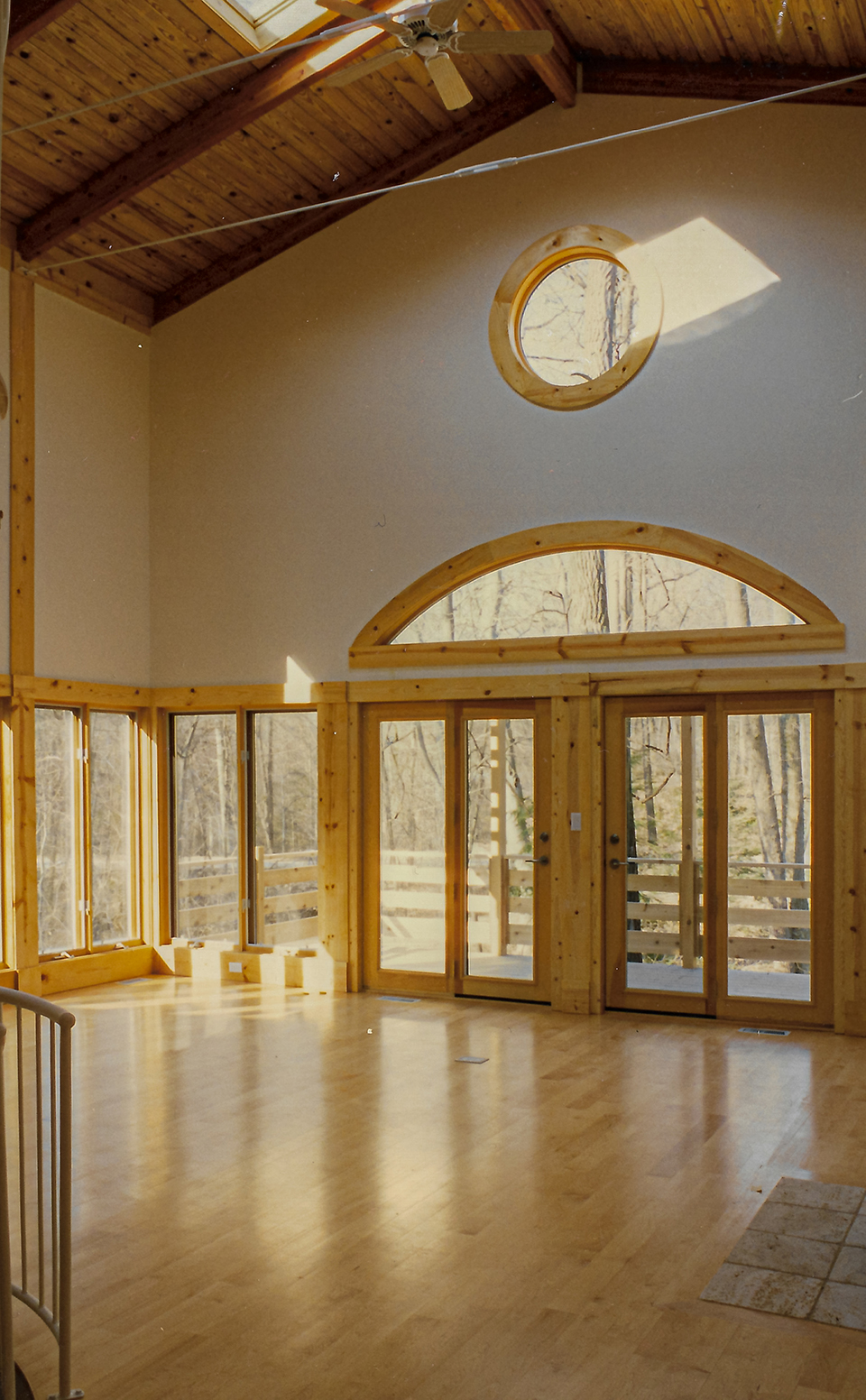
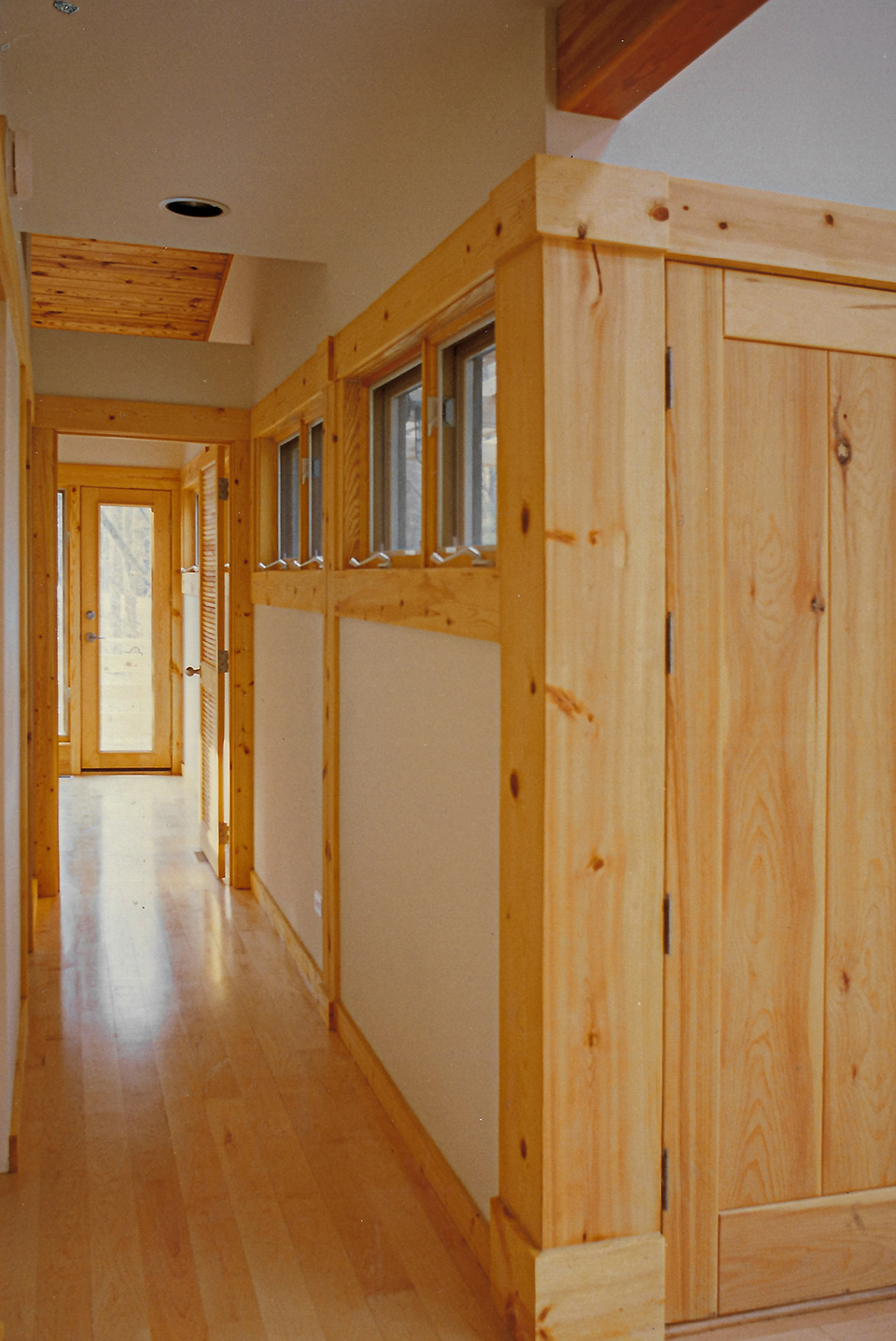
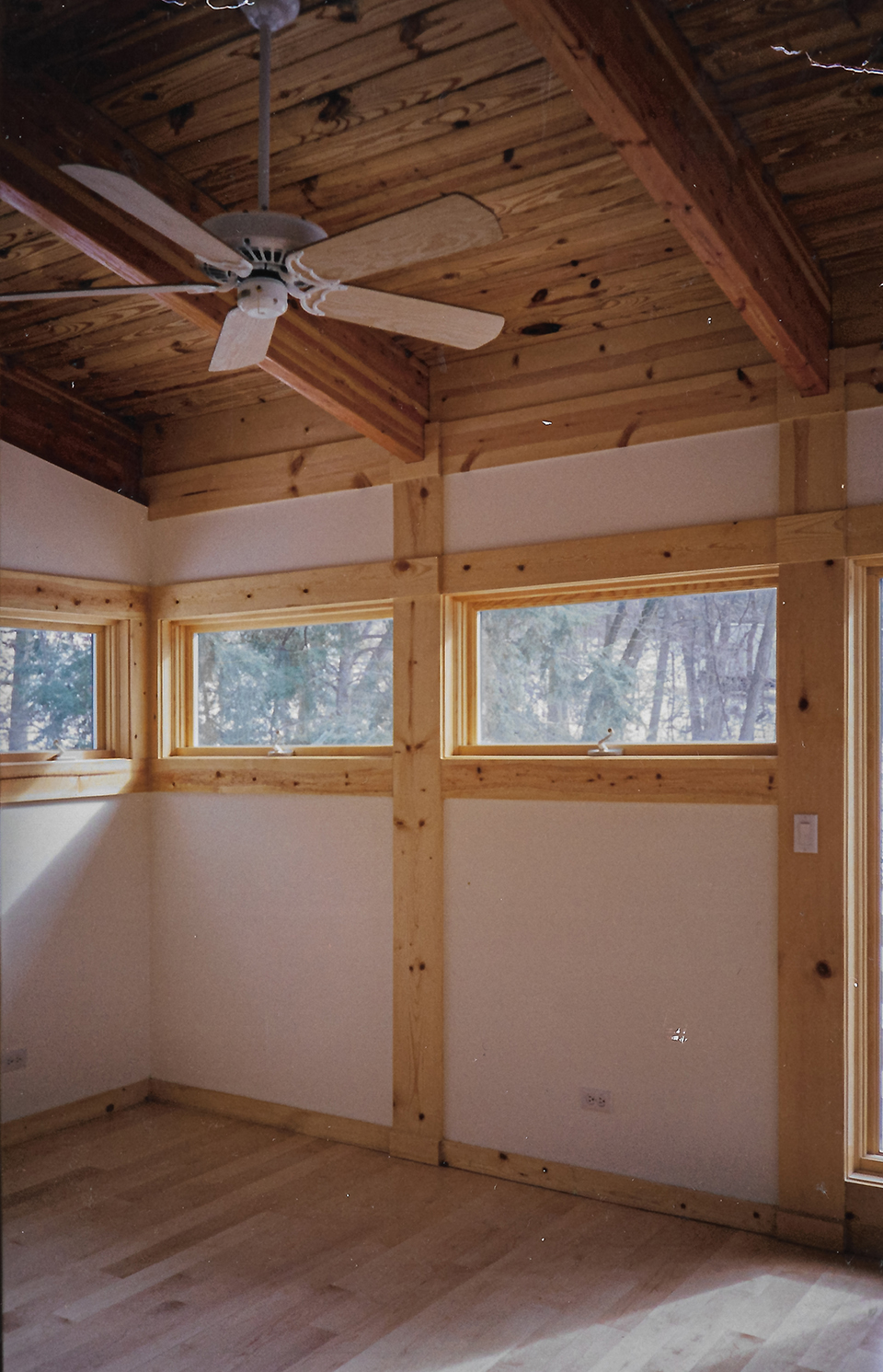
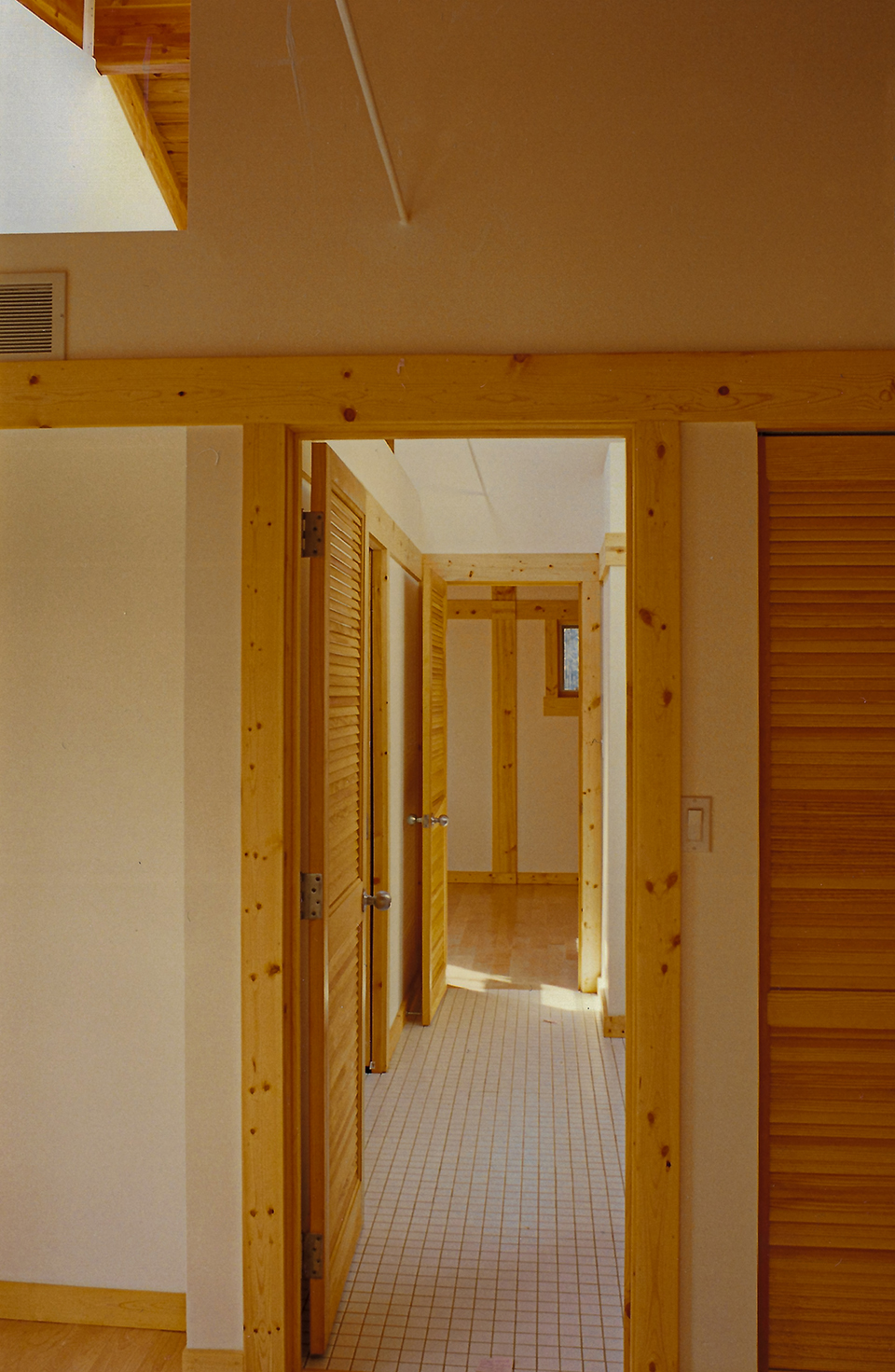
All interior rooms include operable windows on at least 2 walls, louvered doors and ceiling fans making air conditioning only necessary on 90+ degree days and even then, during warm evenings, sleeping bags can be rolled out on the floor of the lower level which remains comfortably cool year-round.
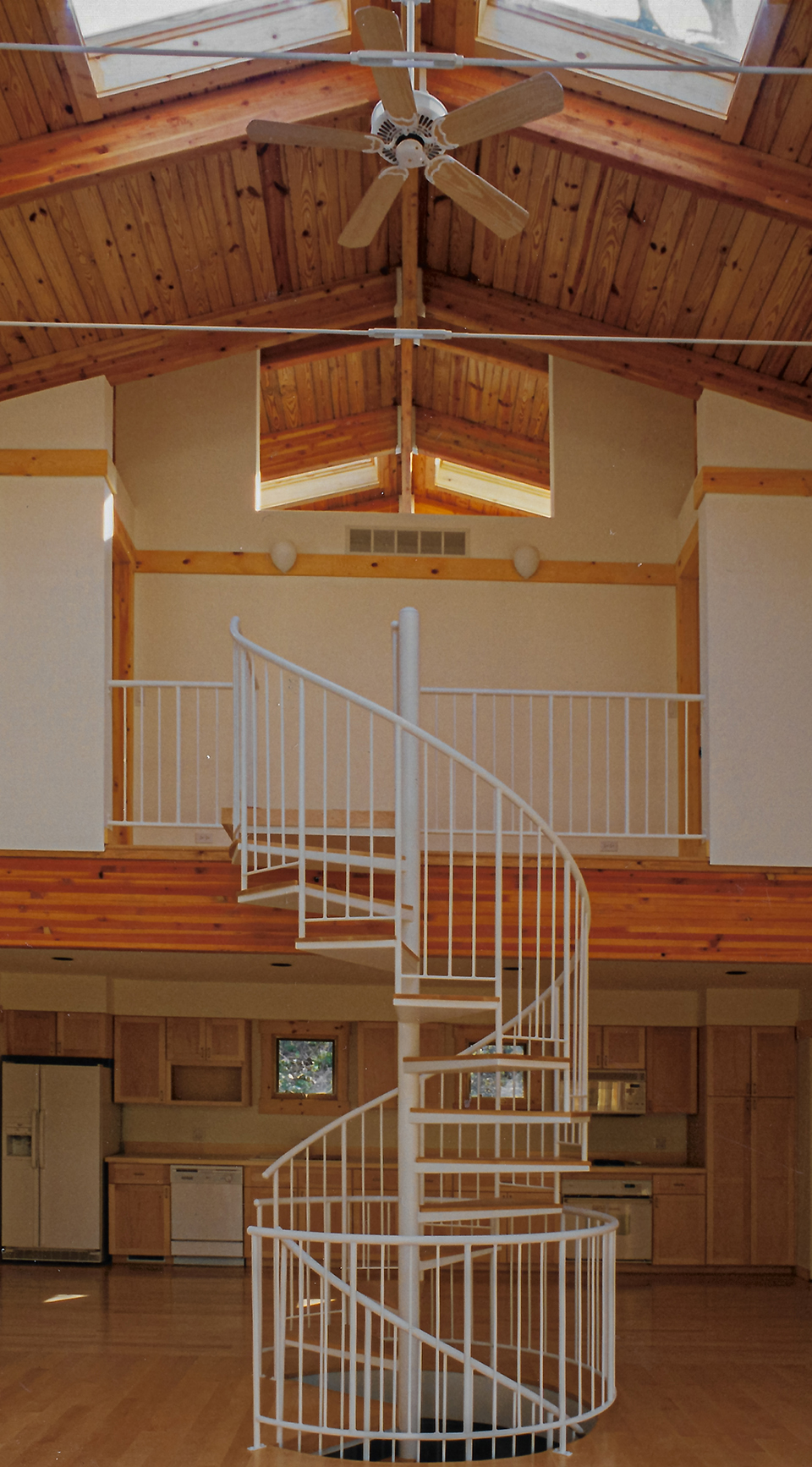
Interior wood is common knotty pine 1x lumber with a light sanding prior to installation. All interior wood is finished with non-petroleum based tung-oil. Kitchen cabinets and bathroom vanities were a stock shaker style clear finish on maple design ordered through Menards as a way to both keep costs down and reinforce an interior aesthetic very much influenced by the minimal modernism of American Shakers.

The first piece of furniture fabricated with wood salvaged from the site was an all-in-one bed inspired by the small bedroom dimensions and the need to be as efficient as possible furnishing the home's interior. The bed was designed/fabricated as a pair of beds that can be used individually or as bunk beds. The headboard rotates to be used as a surface to eat upon or as a convenient bed/desk combo. The bed's wood slats roll back to provide storage for additional pillows and/or blankets. The storage compartments are both structural and functional as either bookcases or clothing storage when clothes are placed in baskets that fit neatly into each compartment. This bed was designed to be every piece of bedroom furniture in one: bed, dresser, bookcase, side table and closet.
9331 dunewood a personal story...
9331 Dunewood or Portrait of the Architect as a Young Man
Due to a “clerical error,” I came up a few credits shy of graduation from the University of Illinois Champaign-Urbana spring 1986. I’d already been accepted to MIT’s master’s degree in architecture program, but before that could happen, I needed to complete a Philosophy 101 class at Loyola University during the summer of 1986. I don’t remember all of what I learned in Philosophy 101 that summer, but I do remember I learned that a sunrise and a sunset in literature and life weren’t always about the sun rising in the east and the sun setting in the west.
For a lot of architects, parents are a first client, and in my case, parents were my 2nd, 3rd, and along with my grandfather, 4th client. My grandfather always had the dream of a vacation cottage along Lake Michigan’s North-West Indiana or South-West Michigan shores. After my return from graduate school, back in Chicago, I rejoined my grandfather and parent's search for a small cottage on or near Lake Michigan on the Indiana and Michigan side of Lake Michigan. My parents came close a couple times to purchasing a cottage and some land but eventually switched their strategy from cottage on a piece of land to a piece of land upon which to design and build a cottage of their design.
I’d grown up on the shore of Lake Michigan, Calumet Park my backyard, and sunrises over Lake Michigan a daily event for those of us rising early enough, or staying out late enough, to see the sun rise. I’d also grown up vacationing every other summer in Saugatuck Michigan and many a night was spent barbecuing, picnicking, and watching the sunset over Lake Michigan from Saugatuck’s Oval Beach.
Eventually, a piece of land became available 16 miles north of the Indiana border in an area known as Dunewood. The available lot was 2.33 acres of wooded sand dunes. Although the lot was large for our modest, 1,200 s.f. cottage, local zoning codes, protecting Michigan’s historic sand dunes, restricted buildable sites to only a few nearly flat areas.
I don’t have accurate records of how long the design process lasted, but I remember at least three years’ worth of Sundays spent at my parent's, then newly constructed, Booth-Hansen designed South-Loop townhome, presenting my latest drawings and models. My architectural presentations were followed by a typical Italian-American Sunday “dinner” (really lunch), and my father telling me on my way out the door, to “return to my drafting board”, as none of my designs so far were what my parents were looking for or had in mind for the cottage of their dreams.
At the request of my grandfather and parents, 9331 Dunewood was inspired by compact 1920s – 1950s Lake Michigan cottages, Arts & Crafts era houses, and a desire for something very different than the brick bungalows my family had grown up in, and around, on Chicago’s South-East Side. As the designer of 9331 Dunewood, I was interested in what I perceived to be architectural connections between Arts & Crafts era cottages, the modern minimalism of American Shakers, and the traditional folk houses of Japan. I was also influenced by the writings and work of Robert Venturi, specifically, Robert Venturi’s recent cottage projects that pushed the traditional boundaries of the cottage housing type into interpretations that were complex and contradictory, but not at the cost of being livable and enjoyable by a family that had little interest in post-modern architectural theory if it couldn’t be enjoyed by a house full of people during long weekend stays.
Additionally, research was undertaken on the history of Dunewood at the local Bridgman Library which maintained, and made available, their extensive collection of regional historical documentation. Newspaper articles and books in the Bridgman Library collection documented not only the geological, archaeological, and botanical history of Bridgman/Dunewood but also the history of South-West Michigan’s Native American people and Bridgman/Dunewood’s more recent non-native population. Native American stories of how the branches of massive softwood trees provided cover during snowstorms and the post-logging transition from softwood to hardwood forest, were of particular interest and eventual influence.
My father really enjoyed the design process, but I think he enjoyed the construction process most as we would often drive up early on Saturday mornings, check-in on construction progress, meet with the contractor, and then play a 9-hole round of golf at nearby Pebblewood Country Club.
On our last vacation together in Saugatuck Michigan, I presented to my grandfather drawings and models of our proposed Dunewood cottage. My grandfather was delighted by my architectural designs and the prospect of our cottage project coming to fruition. Unfortunately, my grandfather passed away before our Dunewood cottage was complete, so he never saw or experienced his dream of a Lake Michigan cottage.
When our Dunewood cottage was finally complete, my father and I would often drive up on Friday nights, just after work, timing our arrival just right so that we could get fried fish, chips, and a beer at a local bar/restaurant. First thing in the morning, we’d head out for 9 or 18 holes of golf at Pebblewood Country Club, and then spend the rest of our weekend working on various projects in and around the cottage, listening to Chicago Cubs or Chicago Bear’s games on the radio, barbecuing, reading, and occasionally, doing nothing in particular.
My father was only able to enjoy 9331 Dunewood for about 6 years before he passed away just shy of his retirement. Prior to my father’s passing, my daughter was born, and for at least a couple of summers, grandfather and granddaughter were able to enjoy 9331 Dunewood together.
One year after my father’s passing, 9331 Dunewood was sold and over the years modified by new homeowners in ways that make the cottage unrecognizable today to my architectural eyes, heart, and soul.
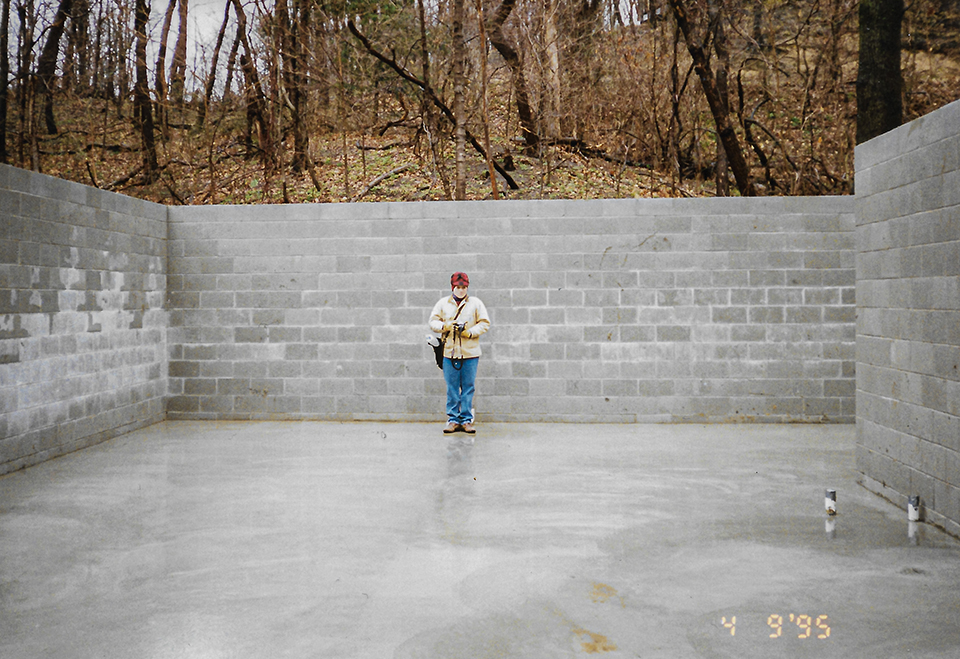
I’d always hoped to have a professional architectural photographer take proper photographs of the cottage, but that never happened, so what I have today are the photographs I took during and just after construction.
The year 9331 Dunewood was completed, the Smashing Pumpkins released Mellon Collie and the Infinite Sadness. According to Wikipedia, the songs of Mellon Collie and the Infinite Sadness are intended to hang together conceptually, with the two halves of the album representing day and night. Billy Corgan has also said that the album is based on "the human condition of mortal sorrow." Billy Corgan aimed the album's message at people aged 14 to 24 years, hoping "to sum up all the things I felt as a youth but was never able to voice articulately…I'm waving goodbye to me in the rear-view mirror, tying a knot around my youth and putting it under the bed."
On the south-west elevation of our 9331 Dunewood cottage, I placed a round window above a semi-circular window, the round window an allusion to the sun’s presence in the daytime sky, the semi-circular window a reference to both the Chicago sunrises we’d grown up with and the Michigan sunsets that were now to be a part of our weekend lives.
As it turned out, day and night, mortal sorrow, and waving goodbye, were all themes I could relate to in the years between 1988 and 2003 and like the album the Smashing Pumpkins left behind in 1995 as a record of their goodbye to their youth, 9331 Dunewood was the architectural record I left behind in 1995 as a goodbye to my own youth.
I'd always been a fan of James Joyce, in particular, A Portrait of the Artist as a Young Man. Rereading Portrait of the Artist back in 1995, the book's final words resonated with me as I thought I was leaving architecture behind, transitioning from working in architecture firms to working for Crate & Barrel, but life had a few additional surprises in store for me, and those are stories for another day...
“Welcome, O life! I go to encounter for the millionth time the reality of experience and to forge in the smithy of my soul the uncreated conscience of my race… Old father, old artificer, stand me now and ever in good stead.”
Due to a “clerical error,” I came up a few credits shy of graduation from the University of Illinois Champaign-Urbana spring 1986. I’d already been accepted to MIT’s master’s degree in architecture program, but before that could happen, I needed to complete a Philosophy 101 class at Loyola University during the summer of 1986. I don’t remember all of what I learned in Philosophy 101 that summer, but I do remember I learned that a sunrise and a sunset in literature and life weren’t always about the sun rising in the east and the sun setting in the west.
For a lot of architects, parents are a first client, and in my case, parents were my 2nd, 3rd, and along with my grandfather, 4th client. My grandfather always had the dream of a vacation cottage along Lake Michigan’s North-West Indiana or South-West Michigan shores. After my return from graduate school, back in Chicago, I rejoined my grandfather and parent's search for a small cottage on or near Lake Michigan on the Indiana and Michigan side of Lake Michigan. My parents came close a couple times to purchasing a cottage and some land but eventually switched their strategy from cottage on a piece of land to a piece of land upon which to design and build a cottage of their design.
I’d grown up on the shore of Lake Michigan, Calumet Park my backyard, and sunrises over Lake Michigan a daily event for those of us rising early enough, or staying out late enough, to see the sun rise. I’d also grown up vacationing every other summer in Saugatuck Michigan and many a night was spent barbecuing, picnicking, and watching the sunset over Lake Michigan from Saugatuck’s Oval Beach.
Eventually, a piece of land became available 16 miles north of the Indiana border in an area known as Dunewood. The available lot was 2.33 acres of wooded sand dunes. Although the lot was large for our modest, 1,200 s.f. cottage, local zoning codes, protecting Michigan’s historic sand dunes, restricted buildable sites to only a few nearly flat areas.
I don’t have accurate records of how long the design process lasted, but I remember at least three years’ worth of Sundays spent at my parent's, then newly constructed, Booth-Hansen designed South-Loop townhome, presenting my latest drawings and models. My architectural presentations were followed by a typical Italian-American Sunday “dinner” (really lunch), and my father telling me on my way out the door, to “return to my drafting board”, as none of my designs so far were what my parents were looking for or had in mind for the cottage of their dreams.
At the request of my grandfather and parents, 9331 Dunewood was inspired by compact 1920s – 1950s Lake Michigan cottages, Arts & Crafts era houses, and a desire for something very different than the brick bungalows my family had grown up in, and around, on Chicago’s South-East Side. As the designer of 9331 Dunewood, I was interested in what I perceived to be architectural connections between Arts & Crafts era cottages, the modern minimalism of American Shakers, and the traditional folk houses of Japan. I was also influenced by the writings and work of Robert Venturi, specifically, Robert Venturi’s recent cottage projects that pushed the traditional boundaries of the cottage housing type into interpretations that were complex and contradictory, but not at the cost of being livable and enjoyable by a family that had little interest in post-modern architectural theory if it couldn’t be enjoyed by a house full of people during long weekend stays.
Additionally, research was undertaken on the history of Dunewood at the local Bridgman Library which maintained, and made available, their extensive collection of regional historical documentation. Newspaper articles and books in the Bridgman Library collection documented not only the geological, archaeological, and botanical history of Bridgman/Dunewood but also the history of South-West Michigan’s Native American people and Bridgman/Dunewood’s more recent non-native population. Native American stories of how the branches of massive softwood trees provided cover during snowstorms and the post-logging transition from softwood to hardwood forest, were of particular interest and eventual influence.
My father really enjoyed the design process, but I think he enjoyed the construction process most as we would often drive up early on Saturday mornings, check-in on construction progress, meet with the contractor, and then play a 9-hole round of golf at nearby Pebblewood Country Club.
On our last vacation together in Saugatuck Michigan, I presented to my grandfather drawings and models of our proposed Dunewood cottage. My grandfather was delighted by my architectural designs and the prospect of our cottage project coming to fruition. Unfortunately, my grandfather passed away before our Dunewood cottage was complete, so he never saw or experienced his dream of a Lake Michigan cottage.
When our Dunewood cottage was finally complete, my father and I would often drive up on Friday nights, just after work, timing our arrival just right so that we could get fried fish, chips, and a beer at a local bar/restaurant. First thing in the morning, we’d head out for 9 or 18 holes of golf at Pebblewood Country Club, and then spend the rest of our weekend working on various projects in and around the cottage, listening to Chicago Cubs or Chicago Bear’s games on the radio, barbecuing, reading, and occasionally, doing nothing in particular.
My father was only able to enjoy 9331 Dunewood for about 6 years before he passed away just shy of his retirement. Prior to my father’s passing, my daughter was born, and for at least a couple of summers, grandfather and granddaughter were able to enjoy 9331 Dunewood together.
One year after my father’s passing, 9331 Dunewood was sold and over the years modified by new homeowners in ways that make the cottage unrecognizable today to my architectural eyes, heart, and soul.
I’d always hoped to have a professional architectural photographer take proper photographs of the cottage, but that never happened, so what I have today are the photographs I took during and just after construction.
The year 9331 Dunewood was completed, the Smashing Pumpkins released Mellon Collie and the Infinite Sadness. According to Wikipedia, the songs of Mellon Collie and the Infinite Sadness are intended to hang together conceptually, with the two halves of the album representing day and night. Billy Corgan has also said that the album is based on "the human condition of mortal sorrow." Billy Corgan aimed the album's message at people aged 14 to 24 years, hoping "to sum up all the things I felt as a youth but was never able to voice articulately…I'm waving goodbye to me in the rear-view mirror, tying a knot around my youth and putting it under the bed."
On the south-west elevation of our 9331 Dunewood cottage, I placed a round window above a semi-circular window, the round window an allusion to the sun’s presence in the daytime sky, the semi-circular window a reference to both the Chicago sunrises we’d grown up with and the Michigan sunsets that were now to be a part of our weekend lives.
As it turned out, day and night, mortal sorrow, and waving goodbye, were all themes I could relate to in the years between 1988 and 2003 and like the album the Smashing Pumpkins left behind in 1995 as a record of their goodbye to their youth, 9331 Dunewood was the architectural record I left behind in 1995 as a goodbye to my own youth.
I'd always been a fan of James Joyce, in particular, A Portrait of the Artist as a Young Man. Rereading Portrait of the Artist back in 1995, the book's final words resonated with me as I thought I was leaving architecture behind, transitioning from working in architecture firms to working for Crate & Barrel, but life had a few additional surprises in store for me, and those are stories for another day...
“Welcome, O life! I go to encounter for the millionth time the reality of experience and to forge in the smithy of my soul the uncreated conscience of my race… Old father, old artificer, stand me now and ever in good stead.”